From “Multilingualism Matters”
The standard (language)-dialect hierarchy
“A dialect is a subordinate variety of a language, so that we can say that Texas English and Swiss German are, respectively, dialects of English and German. The language name (i.e. English or German) is the superordinate term. We can also say of some languages that they contain more than one dialect; for example, English, French, and Italian are spoken in various dialects. If a language is spoken by so few people, or so uniformly, that it has only one variety, we might be tempted to say that language and dialect become synonymous in such a case. However, another view is that it is inappropriate to use dialect in such situation because the requirement of subordination is not met. Consequently, calling something a dialect of a particular language implies that that language has at least two dialects, but calling something a language does not necessarily entail that it has subordinate dialects.” (Wardhaugh & Fuller, 2015, pg. 38).
World Englishes Guest Lecturer: Dr. Kevin Carroll

- Rank: Associate Professor
- Education: Ph.D. University of Arizona 2009
- Research Areas: Language Policy and Planning, Language use among Puerto Ricans, and Critical Pedagogy
- Office: Please Email
- Email: kevin.carroll@upr.edu
Dr. Kevin S. Carroll joined the Department of English at UPR in July 2009. He is from Detroit, Michigan. He studied his B.A. in Inter American University of Puerto Rico at San Germán, the M.A. in The University of Puerto Rico at Mayagüez and the Ph.D in Language, Reading and Culture, at the University of Arizona. Dr. Carroll regularly teaches Public Speaking, University Teacher Development, History of English, Thesis and Independent Research. His teaching interests range from research methods to policy related courses on pedagogy and language. Throughout the 2014-2015 academic year, he is on a leave of absence in The United Arab Emirates where he will be working on a number of research projects related to language policy and planning. His primary project will be to document language policies at institutions of higher education within the Arabian Gulf.
Week 7: INGL 3296 – AAE Debate highlights
Dear all,
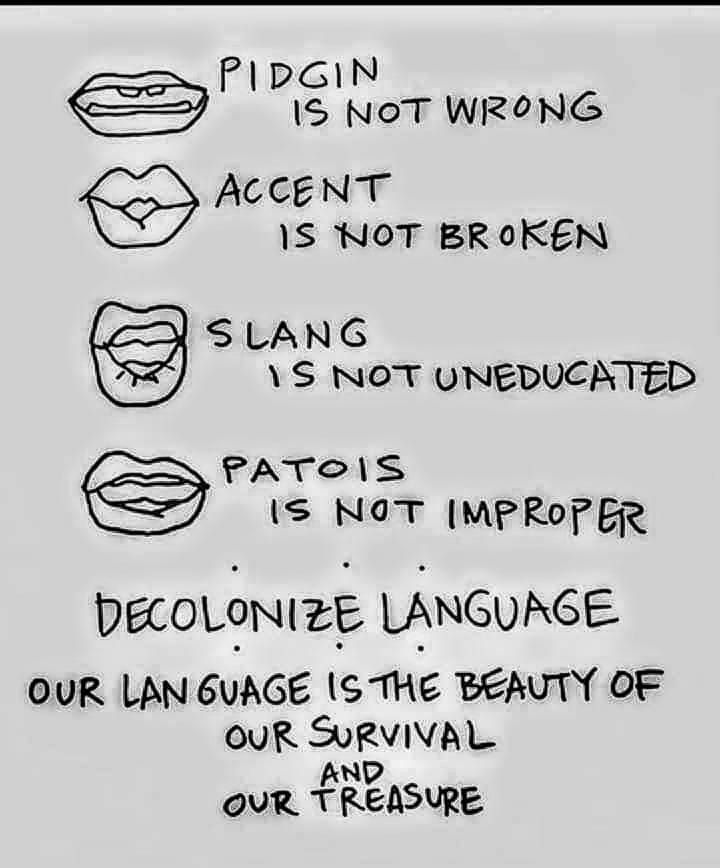
Thank you for engaging in today’s discussion on African American English and it’s potential status as a language. The main concluding thoughts after this exercise are that while AAE is a legitimate variety (way of speaking English) that being are born speaking (it is a “natural language”, quoting Loida, with a set of rules), providing it with a ‘language’ status is a difficult task, as even people disagree in describing what language is in general (the thanks David Giovannetti for your words). Another important fact to recognize, as Christopher Castillo pointed out, is that our Western society, defining a language is heavily dependent on notions of power and prestige, in particular, who has the power to set the standard, the schools, colonize, and make their way of speaking ‘widespread’. AAE does not have power in our sociolinguistic reality, and is considered a ‘dialect’/less prestigious than the standard despite it having its own set of rules (a substandard way of speaking, quoting Ashley Perez). An important point referenced by both groups is the fact that AAE, or African American English(Es) (in plural) are heavily tied with identity, history, and ‘experience’; not everyone has the experience of growing up with AAE, but then again by that same argument, not everyone has the experience of growing up with the Standard (English), but with their own localized variety of English (e.g. Latino English).
African American Englishes do fulfill the rules of any other language, they are intelligible, they do communicate ideas / serve as a medium of expression, they are codified (in popular literature/ entertainment / hip hop), although not to the same extent as Standard Englishes. If we are to define it in LINGUISTICS terms, we could argue that African American English is a language with different varieties (or dialects) of it. However, we could also argue that no way of speaking (variety) is truly ever a ‘Language’, but that all ways of speaking are varieties.
Again, a line has to be drawn somewhere in order for us to be able to examine, analyze, describe, and TEACH different forms of communication and the universalities they share. Thus, deciding what is/is not a language is usually based on the idea of “mutual intelligibility” (mutual understanding) by linguists. In other words, if people can understand each despite (minor) differences then they’re probably varieties of the same language. However, “mutual intelligibility” is also often thought as a problematic concept, that it not considered in Chinese (“Mandarin” and “Cantonese” are not mutually intelligible, but still considered part of the same language), certain dialects of Dutch and German that are mutually intelligible (but considered different languages), etc. Deciding what a language is / is not is highly political and down to identity and (social and economic) power.
I hope this solves any unresolved issues some of you may have. See you next class at 10.30 sharp when we will hear Dr. Kevin Carroll from UPR speak of English language policies in the Caribbean.
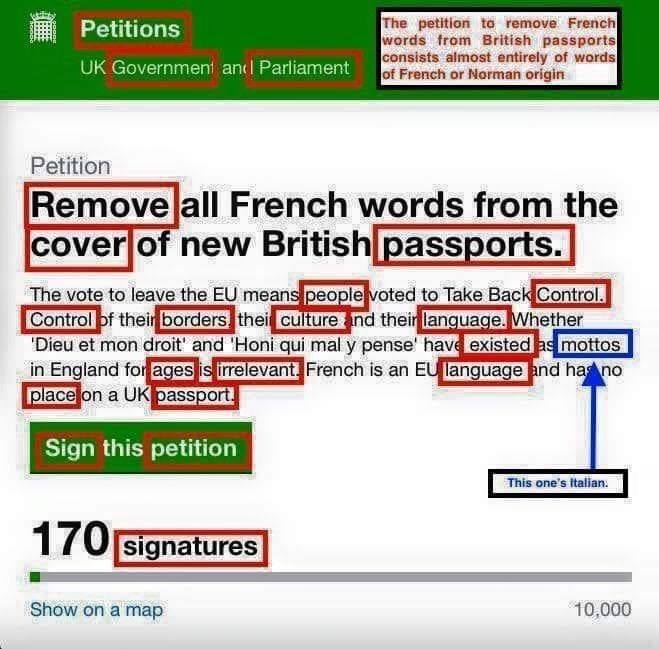
Happy International Mother Tongue Day!
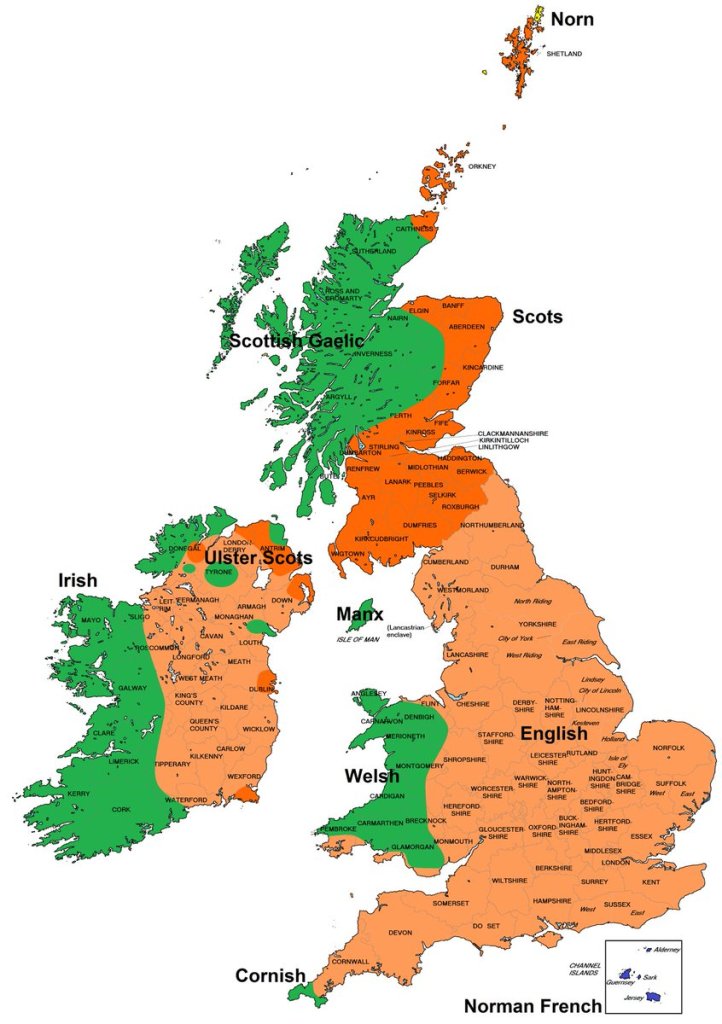
The United Kingdom has 14 indigenous languages! They are also important to their heritage.
Student example contribution “Valentine’s Day” Phrase

Week 4 post suggestions
What are pidgin languages? How do I know which pidgin (language) word to use as example?
Start with https://en.wikipedia.org/wiki/Pidgin for pidgin languages list. Make sure your pidgin word has English composition.
What are creole languages? How do I know which creole (language) word to use as example?
Start with https://en.wikipedia.org/wiki/Creole_language for creole languages list. Make sure your creole word is of English origin.
 World Englishes at UPRM